Turning national development plans into real programs on the ground.
African Century is a strategic advisory and program implementation firm. We work with governments, development finance institutions, and industrial leaders to turn ambitious national policies into funded, working programs across Africa.

From Vision Documents to Bankable Infrastructure
Cities · Clean energy · Food processing · Project finance · Local talent
7 Program Areas
Comprehensive Planning Scope
Infrastructure, clean energy, food systems, economic planning, governance, talent & culture
From Plans to Projects
Meeting You Where You Are
Reviewing and upgrading your existing national development strategies into actionable programs
Public Sector Advisory
Cabinets, DFIs & Planners
Strategic guidance to break inter-agency bottlenecks and build self-sustaining domestic capacity
54 Nations
Continental Network
Connected with Designing Africa and partner technical hubs across the African continent

Translating national development strategies into funded, coordinated programs.
Building on the foundations you have already laid.
African nations possess visionary development strategies and sector roadmaps. Our role is to bridge the final mile: establishing dedicated cabinet delivery units, aligning inter-agency mandates, and structuring bankable capital programs to bring existing plans to life.
We sit with leadership teams to review existing frameworks, resolve bureaucratic bottlenecks, and coordinate with development finance institutions so critical projects reach ground-level implementation.
Comprehensive Master-Planning Across 7 Key Areas
Real national progress cannot happen in a silo. We provide integrated planning across infrastructure, clean energy, food processing, finance, policy, education, and culture.
Select a domain to inspect our program planning scope & deliverables:
Sustainable Urban Design & Economic Zones
Cities, Corridors & Land Planning
Planning resilient cities, regional trade corridors, and industrial zones designed for long-term economic growth, efficient transport, and quality of life.
“Sustainable Urban Design & Economic Zones” — National Planning Framework
Building domestic capability and technological self-reliance.
Sustainable industrial transformation succeeds only when domestic teams own and master the technology. We integrate modern prototyping infrastructure with 12-month engineering fellowships—ensuring local institutions operate, repair, and innovate independently.
By establishing direct partnerships with national polytechnics and technical universities, we equip local engineering cadres to fabricate precision components, run clean solar microgrids, and lead industrial facilities without external dependency.
72 Hours
Local turnaround for parts and machine repair (vs 9 months abroad)
12 Months
Hands-on engineering fellowships inside real operating hubs
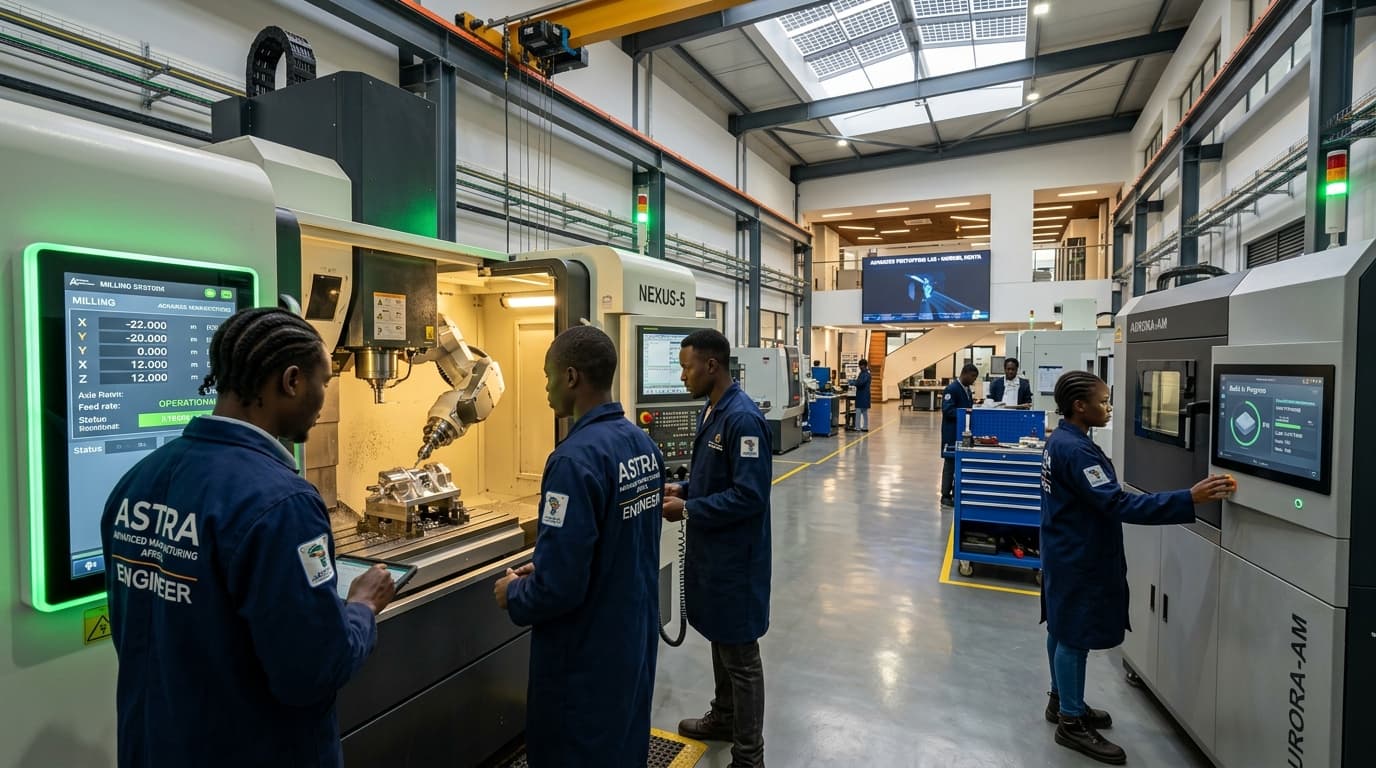
Linking universities and polytechnics directly with working industrial equipment.
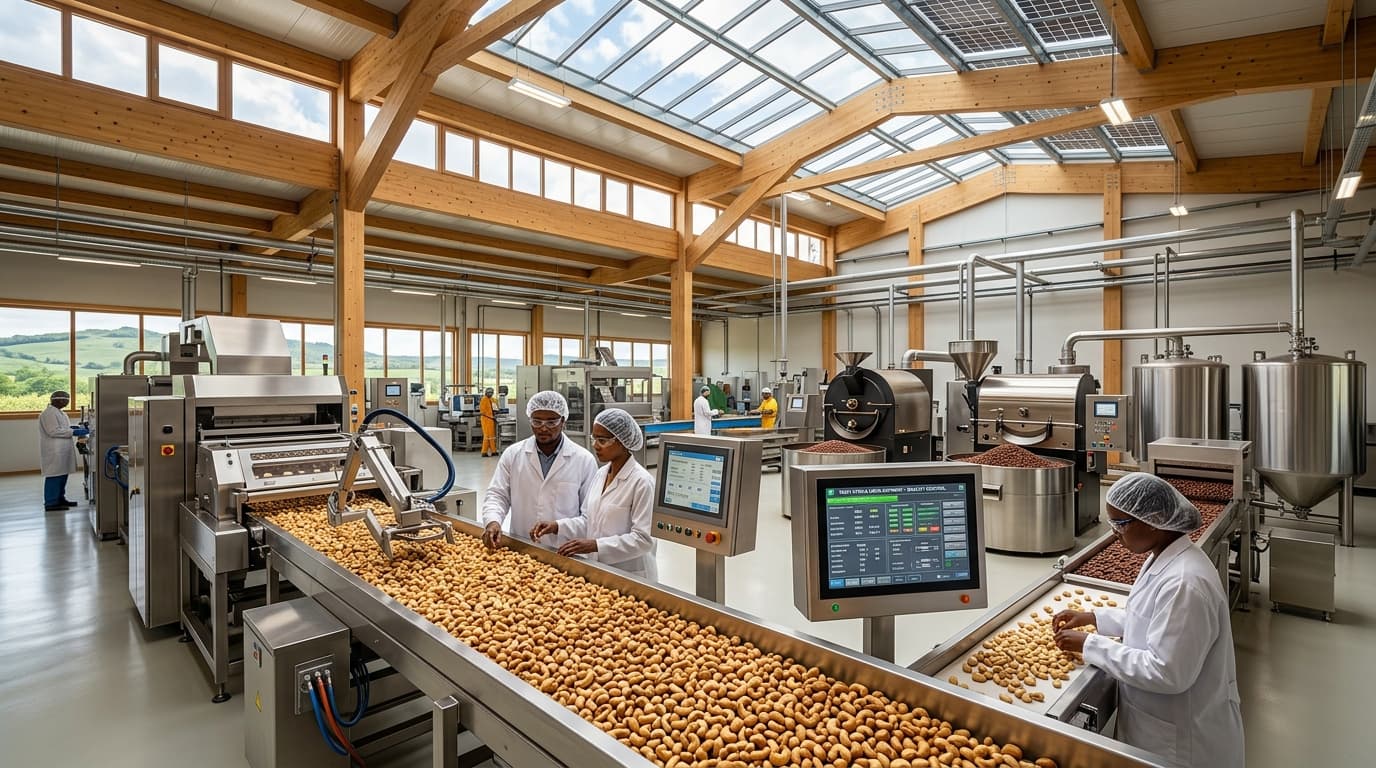
Turnkey modular units for cashew, cocoa, grains, and fruits.
Capturing more value from agriculture at home.
Exporting raw commodities leaves most of the economic value on foreign tables. We plan turnkey modular processing facilities that allow agricultural regions to process crops locally, cut post-harvest losses, and supply regional markets.
+400%
Value recaptured by processing crops in-country
< 3%
Post-harvest loss with solar drying and cold storage
A Clear, 3-Phase Path From Strategy to Delivery
We guide government agencies and project sponsors through three distinct stages—ensuring clarity at every step, bankable financing, and smooth handover to local management.
Phase I: Review & Diagnostic
We review your nation's existing development plans, sector strategies, and institutional assets across our 7 program areas. We identify what is working, address bottlenecks, and define high-impact priorities.
Key Outcomes:
Phase II: Master-Planning & Financing Structure
We design the detailed roadmap: coordinating across ministries, planning physical infrastructure and clean energy, structuring the local talent pipeline, and assembling bankable financing with development partners.
Key Outcomes:
Phase III: Implementation & Local Handover
We support your leadership through early execution—setting up the delivery unit, connecting your hub with sister centers across Africa, and mentoring local teams until they run everything independently.
Key Outcomes:
Presidencies, Cabinets & Planning Commissions
Heads of State, Ministers, and national planning commissions seeking practical master-planning that unites ministries and turns long-term visions into delivered programs.
Development Finance Institutions (DFIs)
Regional and international development banks looking for well-planned, derisked project pipelines with high economic impact and clear governance.
Economic Zones & Industrial Parks
Operators and corridor authorities needing integrated planning: clean energy, sustainable layouts, logistics, and skilled workforce pipelines.
Polytechnics & Technical Universities
Higher education and vocational institutions ready to link student fellowships directly with real operating facilities and African professional networks.
Connected Hubs Across 54 Nations
In alliance with Designing Africa, we link national programs into a shared continental network—enabling cross-border technology sharing, regional trade, and talent exchange.
Clean Energy Microgrids
Islandable zero-carbon microgrids co-located directly with industrial conversion nodes.
Bypasses carbon-heavy, brittle centralized national grids. Each industrial hub generates its own continuous baseload by converting agricultural processing waste (cashew shells, cocoa pod husks) into clean thermal steam and electricity, backed by bifacial solar arrays and localized battery energy storage systems (BESS).
The Leapfrog Infrastructure Advantage
By deploying all five layers in harmony, an African nation creates an unassailable domestic industrial ecosystem: powered by its own clean sun and bio-waste, fabricating its own machine tools, and financing without predatory foreign debt.
View full spatial master plan specifications
Kweku Fleming
Senior Facilitator, Stanford Seed · Btumi
Three Decades of Engineering & Transformation Leadership
Led by Kweku Fleming (Senior Systems Architect, Senior Facilitator for Stanford Seed at Stanford University, and Co-Director of Btumi). Personally coached and transformed more than 800 CEOs and enterprise leaders across West, East, and Southern Africa.
Policy White Papers & Master-Planning Frameworks
National Innovation Infrastructure: A Framework for Industrial Hubs in West Africa
A practical guide for ministries and development partners to plan and fund physical industrial centers.
Key Topics:
Strategic Program Planning for African Industrialization
Translating national development strategies into funded, operational infrastructure.
Key Topics:

Ready to turn your national development plan into an actionable program?
We partner with governments, development finance institutions, and industrial leaders to plan, finance, and implement lasting programs across Africa.